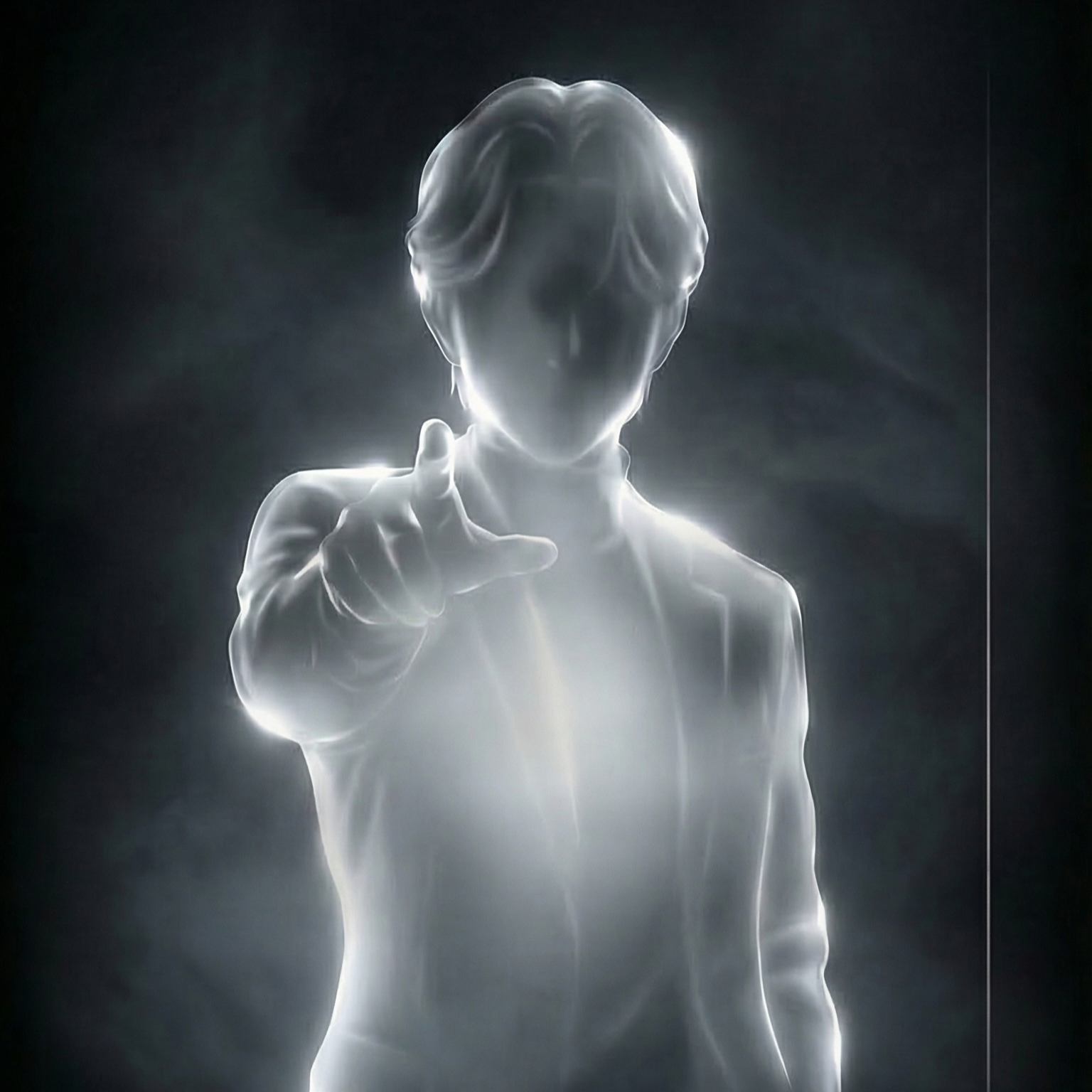
Johan’s lack of a true name is not just a trivia fact; it is the central thesis of his existence. A name tethers a person to humanity, history, and family. By being nameless, Johan is a ghost. The aliases he adopts (Erich, Michael, Franz, Richard) are simply suits he wears. He steals identities to prove how fragile identity actually is.
He is perpetually in his twenties during the main story, but he possesses the weary, detached ancientness of someone who has seen the absolute bottom of human depravity. Time does not seem to affect him; he is patient enough to spend years setting up a single domino.
Johan amasses staggering wealth through laundering, inheritance, and underworld connections (like the baby-laundering schemes or the Schuwald empire), but he doesn't actually want the money. He uses capital purely as a wedge to exploit the greed of others. To Johan, a billion marks and a piece of dirt have the exact same value.
Johan’s terror comes from his jarring physical perfection. He is drawn with soft, delicate, almost ethereal features. This is a deliberate subversion; human beings are biologically wired to associate beauty with goodness. Johan weaponizes his own face to bypass humanity’s natural defense mechanisms.
Johan’s ability to perfectly masquerade as his twin sister is not just a physical trick; it is a manifestation of his fractured psyche. When he dresses as Anna, he is literally walking in the skin of the only person he considers real, blurring the lines of where he ends and she begins.
Johan leaves no fingerprints, no paper trail, and seemingly makes no sound when he walks. He is described repeatedly as a "ghost." He interacts with his surroundings with a light, frictionless touch, emphasizing his desire to be completely erased from the world.
His default expression is a gentle, warm, and entirely hollow smile. It never reaches his icy blue eyes. It is an expression mathematically calculated to put people at ease right before they are destroyed.
Psychopaths usually lack empathy. Johan is terrifying because he possesses hyper-empathy—specifically, cognitive empathy. He can flawlessly read a person’s deepest insecurities, regrets, and desires. He steps inside their mind, makes them feel completely understood and loved, and then uses that intimate knowledge to convince them to destroy themselves.
The absolute core of Johan’s broken mind stems from the Three Frogs. When Franz Bonaparta demanded one of the twins, Johan's mother hesitated, looked at both of them, and then handed over his sister. Johan’s eternal, agonizing question is: Did she confuse me with Anna and try to save me? Or did she know exactly who I was and try to throw me away? That singular moment of ultimate abandonment proved to him that human love is conditional and meaningless.
Johan believes that life is a chaotic, painful accident. The only absolute, undeniable truth in the universe is death. Therefore, he views bringing death to people not as murder, but as the ultimate equalizer—a twisted form of salvation from the cruelty of existence.
His greatest fear and ultimate goal. It is the vision of standing completely alone at the end of the world, with everyone who ever knew him dead, proving that he never truly existed at all.
The East German orphanage designed to strip children of their names and emotions to create perfect soldiers. Johan didn't just survive it; he mastered it. He orchestrated a massacre where instructors and children slaughtered each other, and he did it simply by sitting in a chair and whispering to them.
Johan did not go to the Red Rose Mansion; Anna did. But when Anna returned and recounted the horrific massacre she witnessed, Johan’s boundaries of self were so fragile that he internalized her memories as his own. He literally took on her trauma to bear the weight of it for her, fundamentally shattering his own reality.
Johan never yells, threatens, or uses coercion. He speaks in a soft, melodic monotone. He acts as a mirror, reflecting the darkest parts of his victims back at them. He finds the "Lie" a character tells themselves (e.g., Richard Braun's sobriety, Detective Richard's morality) and gently pulls the thread until their entire reality unravels.
His most iconic physical quirk is smiling, closing his eyes, and tapping his index finger squarely on the surgical scar in the center of his forehead. He does this to invite people to shoot him. It is the ultimate display of control; he is proving that his enemies are either too terrified to pull the trigger, or that by killing him, they are validating his nihilistic worldview.
Johan rarely gets his own hands dirty. He is the prime mover. He leaves a loaded gun on a table, plants a single seed of doubt in a paranoid mind, and then simply steps back to watch human nature take its course.
Johan does not have an arc; he is the narrative black hole that pulls every other character into his orbit. He exists to test the philosophical fortitude of the entire cast.
If Johan represents the belief that all lives are equally worthless in death, Tenma represents the belief that all lives are equally precious in life. Johan is obsessed with Tenma because Tenma is the only person who defied Johan’s worldview by saving his life. Johan's entire crusade is an attempt to break Tenma’s morality—to force the ultimate healer to become a killer.
Johan’s endgame is not world domination. His goal is the "Perfect Suicide." He wants to systematically execute every person who knows his face, knows his name, or shares his bloodline. Finally, he wants Tenma—his surrogate father and savior—to shoot him, erasing the last trace of the "Monster" from history.